
Shop Talk
How to Hire for the Great Retirement
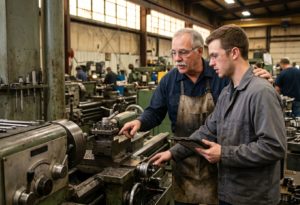 The “Silver Tsunami” has been a talking point in manufacturing for over a decade, but for many Rust Belt facilities, the wave has officially made landfall. We see it every week: a Lead Maintenance Tech or a Master Machinist, the person who knows exactly which valve to turn when the 30-year-old press starts humming the wrong way, announces their retirement.
When these veterans walk out the door, they take more than just years of service with them. They take tribal knowledge, the undocumented, unwritten expertise that keeps your shop floor running.
In the current reindustrialization era, hiring to replace these legends isn’t just about finding someone with the same years of experience; it’s about hiring for knowledge transfer. Here is how to strategically approach talent acquisition to ensure your shop doesn’t skip a beat when your veterans clock out for the last time.
1. Shift from Replacing to Succeeding
The biggest mistake we see companies make is waiting until a veteran is two weeks from retirement to post a job ad that looks like a carbon copy of a 1995 job description.
Instead of looking for a replacement, hire for a succession role. This means bringing in a candidate 3 to 6 months before the veteran leaves. When you frame the role as a succession path, you attract high-potential talent who are eager to learn from a master. It changes the pitch from “come work this machine” to “come inherit a legacy.”
2. Hire for Soft Skills to Unlock Hard Skills
Technical proficiency is a given, but when hiring for a role that requires a heavy knowledge hand-off, you must prioritize communication and curiosity. If your retiring veteran is a person of few words, you need a new hire who knows how to ask the right questions. During the interview process, look for candidates who demonstrate:
- Active Listening: Can they relay back complex instructions?
- Documentation Habits: Are they comfortable using digital tools or even a standard logbook to record the way things are done?
- Patience: Learning decades of nuance takes time. You need someone who values the old school way before they try to innovate.
3. Incentivize the Teacher, Not Just the Student
Talent acquisition doesn’t stop once the offer letter is signed. To ensure the new hire actually gains that tribal knowledge, the veteran must be empowered to teach.
We encourage our clients to create a “Legacy Bonus” or a “Mentorship Premium.” By incentivizing your retiring staff to successfully onboard their successor, you turn a potentially bittersweet departure into a mission-critical project. It ensures the veteran feels valued for their brain, not just their hands, and creates a smoother transition for the new hire.
4. Bridge the Tech Gap
Often, the veteran’s knowledge is stored in their head, while the new generation of talent prefers digital workflows. Your talent acquisition strategy should include finding “Digital Translators”—workers who can take the veteran’s manual processes and help your company move them into a CMMS (Computerized Maintenance Management System) or ERP.
By hiring someone with a blend of mechanical aptitude and digital literacy, you aren’t just maintaining the status quo; you’re using the retirement transition to modernize your operations.
The Bottom Line
The Rust Belt was built on the backs of workers who spent 40 years mastering a single craft. We can’t replicate that overnight, but we can hire with the intention of capturing it.
If you have a key retirement on the horizon, don’t wait for the retirement party to start your search. The best time to hire a successor was six months ago, the second best time is today.
Are you preparing for a leadership or technical transition in your plant? Contact the Rust Belt Recruiting team today to discuss how we can help you find the next generation of talent to carry your legacy forward.